The Olive Grove
One hundred trees that were here before us.
Two hectares of red Pugliese earth, one hundred centenary olive trees, and one tree in particular — the one at the heart of the courtyard, around which the whole house was redrawn.
The grove around the house
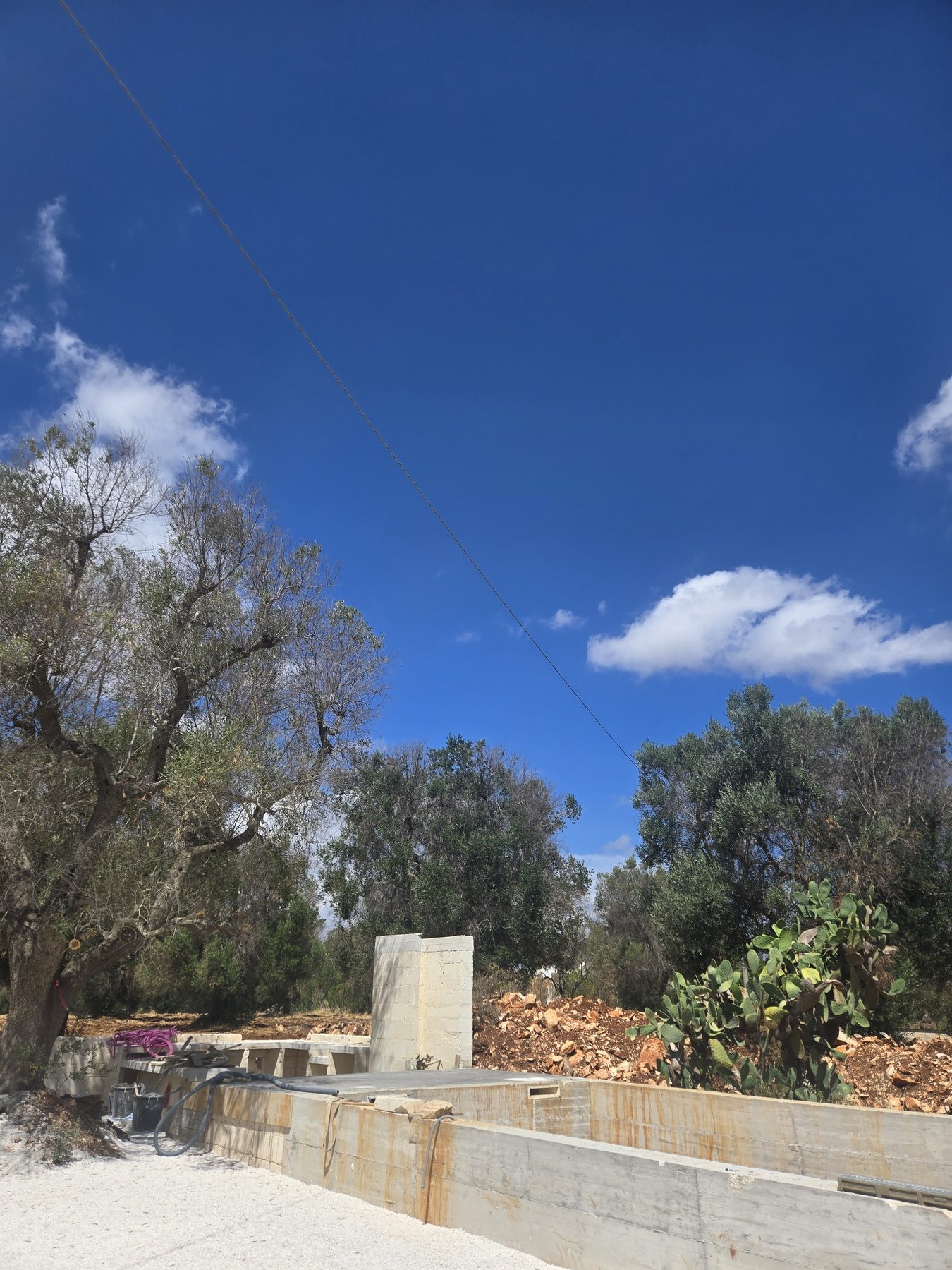
The estate is two hectares of olive grove on the gentle slope above San Vito dei Normanni. Roughly one hundred trees, most of them between one and two centuries old, planted in the irregular Pugliese rhythm — not the tidy alleys of an industrial orchard, but the slow geometry of a place that grew up around its own trees. Several of them are old enough to have stood through the late Kingdom of Naples and into the present without ever being moved.
The macchia at the edges — wild fennel, lentisk, prickly pear — has been kept rather than cleared. The understory is part of the grove.
One tree, at the centre
When Claudio Monnini, the architect, made the first sketch of Casa Andrea in August 2022, he placed a single centenary olive at the geometric centre of the courtyard. Every line of the project — the two new wings, the pool, the stone steps — was bent around that one tree. The casale sits on one side of it. The bedrooms open onto it from the other. The rooftop bureau looks down at it from above.
We tell the full story of why we did it that way in a longer note: An olive tree at the heart of a house.
The harvest, and the oil
The olives are picked by hand in October, in two or three passes spread across two or three weeks, before the first cold spell turns the fruit bitter. The harvest is small by Italian commercial standards — a few hundred kilos in a good year — and is pressed cold, within forty-eight hours, at a mill in the next village. What comes back is a single, unfiltered oil: green, peppery, slightly bitter at first sip. We do not sell it. There is enough for the kitchen, enough for guests, and enough to give a bottle away.
What you'll taste of it during a stay
The estate oil is in the kitchen at all times — on the long table at breakfast, on the bread before dinner, on the tomato salad with a pinch of salt and nothing else. If you arrive in late autumn, the year's new oil is on the shelf and tastes nothing like what you've had in winter. If you ask, we'll arrange a small tasting with bread and one or two oils from the neighbours' presses to compare.
The grove is the reason the house is shaped the way it is. Coming to stay here means living inside it for a week or two — under the canopy, around the trunk, with the oil on the table.